











And then, suddenly, the anger was there—standing right in front of me, raw and unexpected. It hit me like a wave, so intense that for a moment I forgot how to breathe. I was angry at my own child, something I had never allowed myself to feel before. But now, with a clearer view of my own life, with the growing awareness that I matter too, I couldn’t help but ask myself: how could my own flesh and blood ignore me like this? How could she be so harsh, so cold? Five years had passed—five long years in which I twisted myself into every possible shape, trying to reconnect, hoping, pleading for a new beginning, for a conversation, for one chance to make things right. And what did I receive in return? Silence. Empty, cold silence. And now that this anger had finally found me, I realized how deeply I had buried it, how I had never allowed myself to truly be angry at my own child. Instead, I carried that all-consuming grief, the kind that grips your heart like iron.
Why hadn’t I allowed myself to feel anger sooner? Why had I kept trying to preserve peace while breaking inside? Are we forever bound by blood, or is there space to feel anger—even toward your own child? I searched my soul, examined every mistake, every word, every action, asking myself what I had done wrong, how things could have been different. But no matter how hard I searched, I found no answers that brought me peace. And then, when I saw how she portrayed me on X as the most horrible mother imaginable, something in me broke. A storm rose inside me that I could no longer contain. Using an account under the name of the Worst Mother, I responded—my anger turning into words. Maybe it wasn’t my best decision, maybe not the wisest, but it released something, as if I finally let go of a piece of that pain.
I also read on X that she was planning to write a loving letter to her Wordfather, thanking him for the beautiful bungalow he had given her in his garden. When I read that, something inside me boiled over. The thought that she could write him a letter full of gratitude, while I had been left behind with nothing but rejection and silence, made my anger explode. In a surge of raw emotion and hurt, I responded: “And I can only receive shitty letters. Regards, the Worst Mother.” It wasn’t my finest moment, but in that instant, I needed to release the bitterness and the truth—unfiltered and unapologetic. It was also there, on X, that I discovered something even more painful: that Wordfather had suggested ignoring me—that it had been their plan. But that plan had already been in motion for six years. Six years of silence, rejection, and not knowing. And now, faced with that truth, I felt anger and grief merging into something new inside me. Maybe this anger would finally free me, finally give me space to breathe again, to live again.
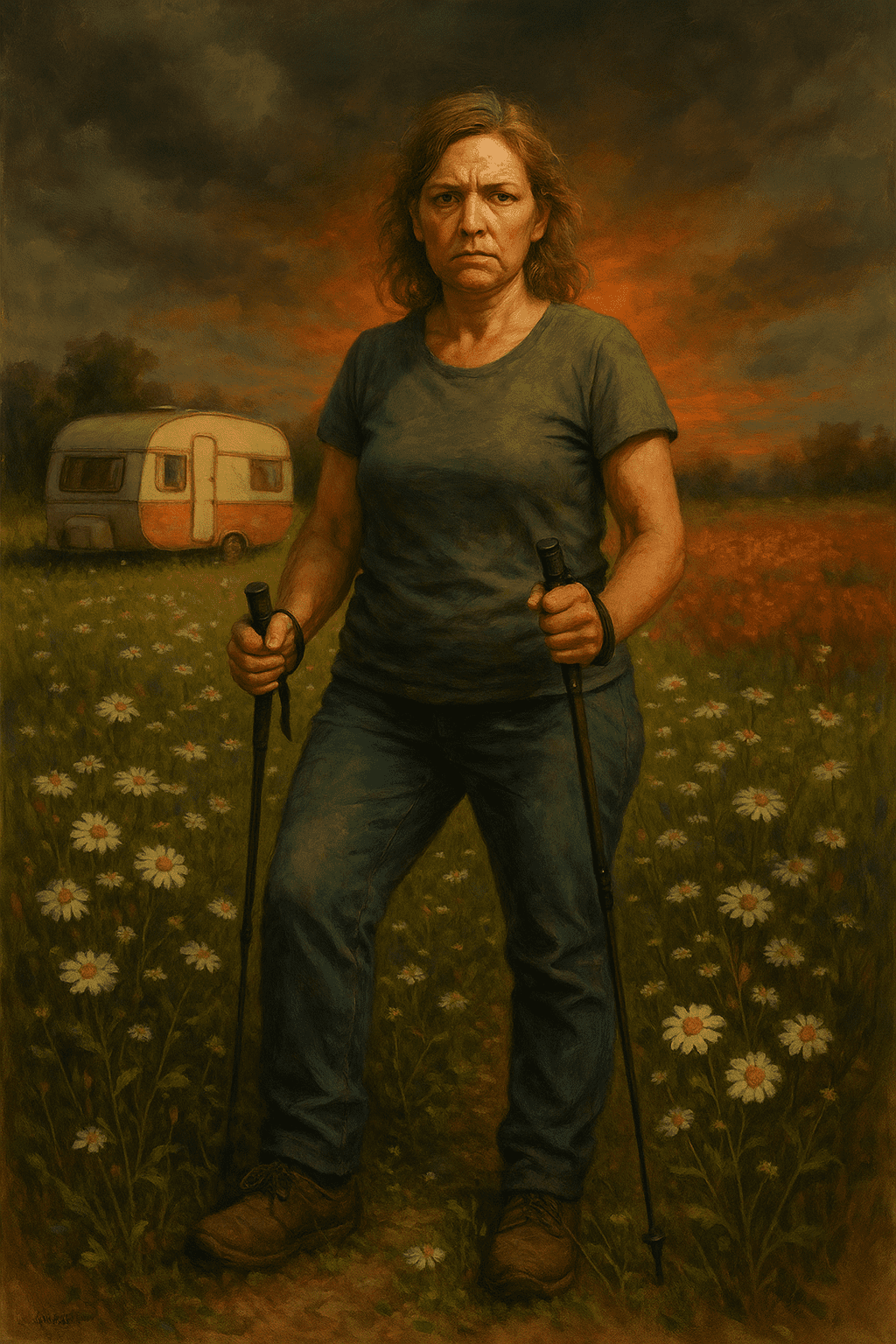
It felt as if my entire world was collapsing, as if all the suppressed anger had finally found its way out. In an impulsive burst, driven by that emotional storm, I decided to buy a folding caravan. It wasn’t a well-thought-out plan, more an act of rebellion against everything that had weighed me down for years. Thankfully, my best friend was there—as she always was—to support me. Together we picked up the caravan, and she offered me a place on her land, surrounded by nature. There, in the quiet and the green, I slowly began to find myself again. Away from the chaos and the people who had hurt me, I discovered a kind of peace I hadn’t known in years. Nature held me, gave me space to breathe, to move. I felt a strength rising within me, one I had forgotten I still had. Every day I pushed myself a little further—without a walker—step by step, retraining my body and mind, becoming stronger again. With my Nordic walking poles, I crossed the wide fields, my feet brushing through wild chamomile that grew everywhere. Its soft, sweet scent filled the air, like a balm for my soul, wrapping itself around the caravan as if nature itself was trying to comfort me. And there, in that simplicity and stillness, I found not only peace but also the strength to keep going.
For a while, writing The Worst Mother came to a halt. It felt as if the writing itself had led me to this anger. I had written out all my grief, poured it onto the page. Slowly, I began taking small steps back toward society, because I had withdrawn into my own world of sorrow. Gradually, the storm inside me began to settle. Not because everything was resolved—but because I felt I could no longer stay silent.
Wordfather had always been someone I looked up to. He was highly educated, much more articulate than I felt I was, and he knew it. His command of language was impressive—something I admired, but that also made me feel small. Whenever I spoke, he would correct my sentences, and often I would lose my train of thought entirely. I started to believe that what I had to say mattered less than how I said it. This dynamic shaped our entire relationship. Where I sought equality, he often positioned himself above me. This pattern repeated itself not only in conversation but also in how we raised our children and how he interpreted the parenting plan. Even during our high-conflict divorce, he managed to maintain the upper hand, using words as his weapon.
During the divorce, and through the weekends the children spent with Wordfather, my life became an emotional rollercoaster. I reacted to him with anger in ways our children couldn’t understand. But what affected me most was how he positioned me. He knew exactly how to trigger me, how to make me appear as the angry witch in front of the children. Do you recognize this? You think you’re playing football, and suddenly he shows up holding a hockey stick. These were the kinds of triggers he used—subtle, calculated, effective. He had done it during our marriage, and during the divorce it only intensified. He ignored agreements from the parenting plan, creating confusion and frustration. He excluded me from important moments like birthdays and appointments. He even took risks with the children—like swimming during a thunderstorm or driving them on icy roads. Everything they did was approved, even when it wasn’t good for them. And when I asked them to help with small tasks, he would undermine me by saying it wasn’t necessary because he would do it himself. In those moments, I often felt transported back to my own childhood—a time that, while simpler, carried its own emotional intensity.
Back then, volleyball was my refuge, my passion. While I now try to stay standing in this emotional battle, I often think back to those matches—how I gave everything at the net, defending my position with everything I had. One day, a friend asked me to join her handball game. I barely knew the sport beyond gym class, but I agreed to step in when someone dropped out. It didn’t go as planned. During the game, an opponent collided with my hands, and it looked as though I had hit her. I was immediately sent off the field. It felt so unfair. Luckily, after the match, the referee apologized and cleared up the misunderstanding. That moment taught me something important about fairness, misinterpretation, and the power of communication.
Writing had opened me up. And somewhere deep inside, I knew: the only way forward is with open hands and an open heart—willing to write, even when it hurts. ❤️
Geef een reactie